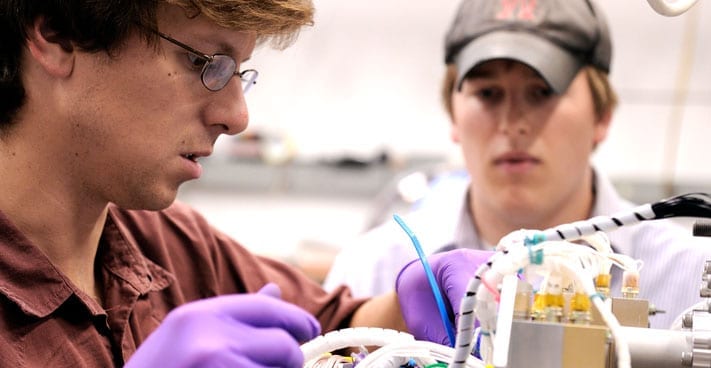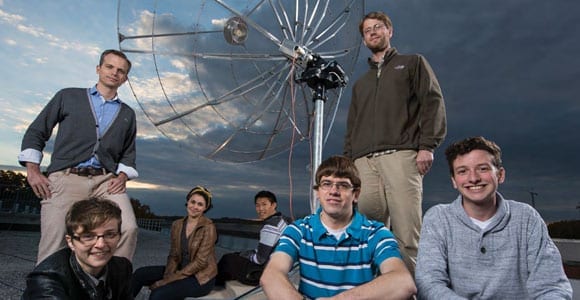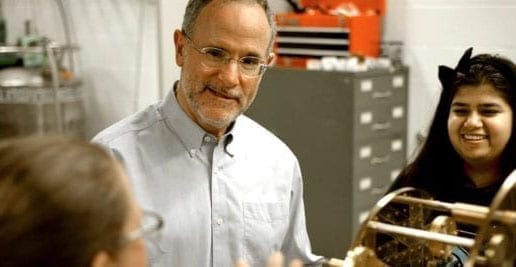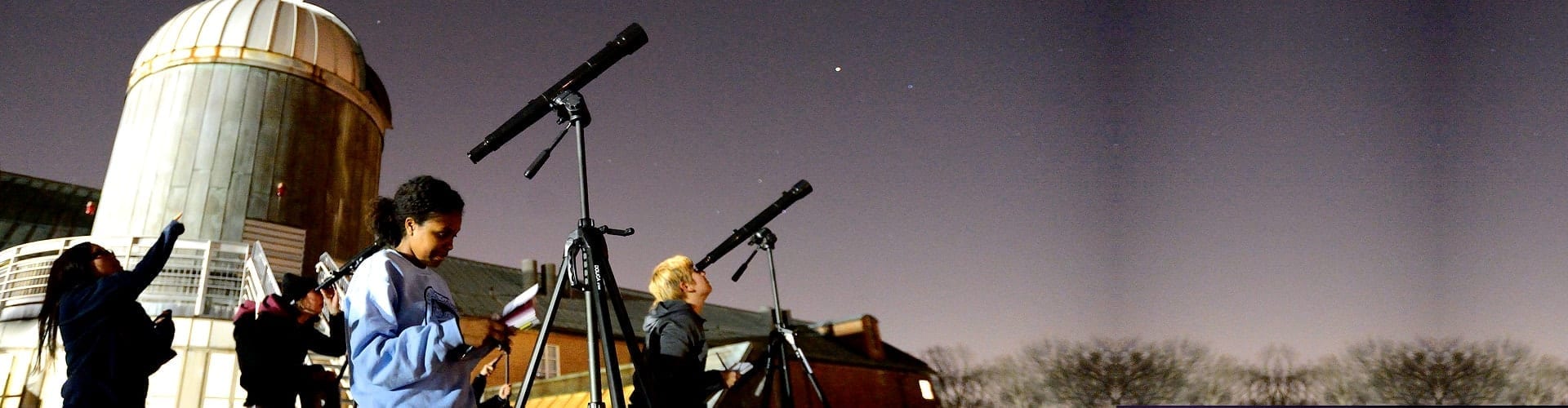
With its world-renowned faculty and state-of-the-art facilities, the William H. Miller III Department of Physics and Astronomy combines the best aspects of a top research university with the more intimate learning environment typical of small liberal arts colleges.
A flexible curriculum accommodates students with post-graduation aspirations as diverse as graduate study, medical or law school, teaching, or technological careers.