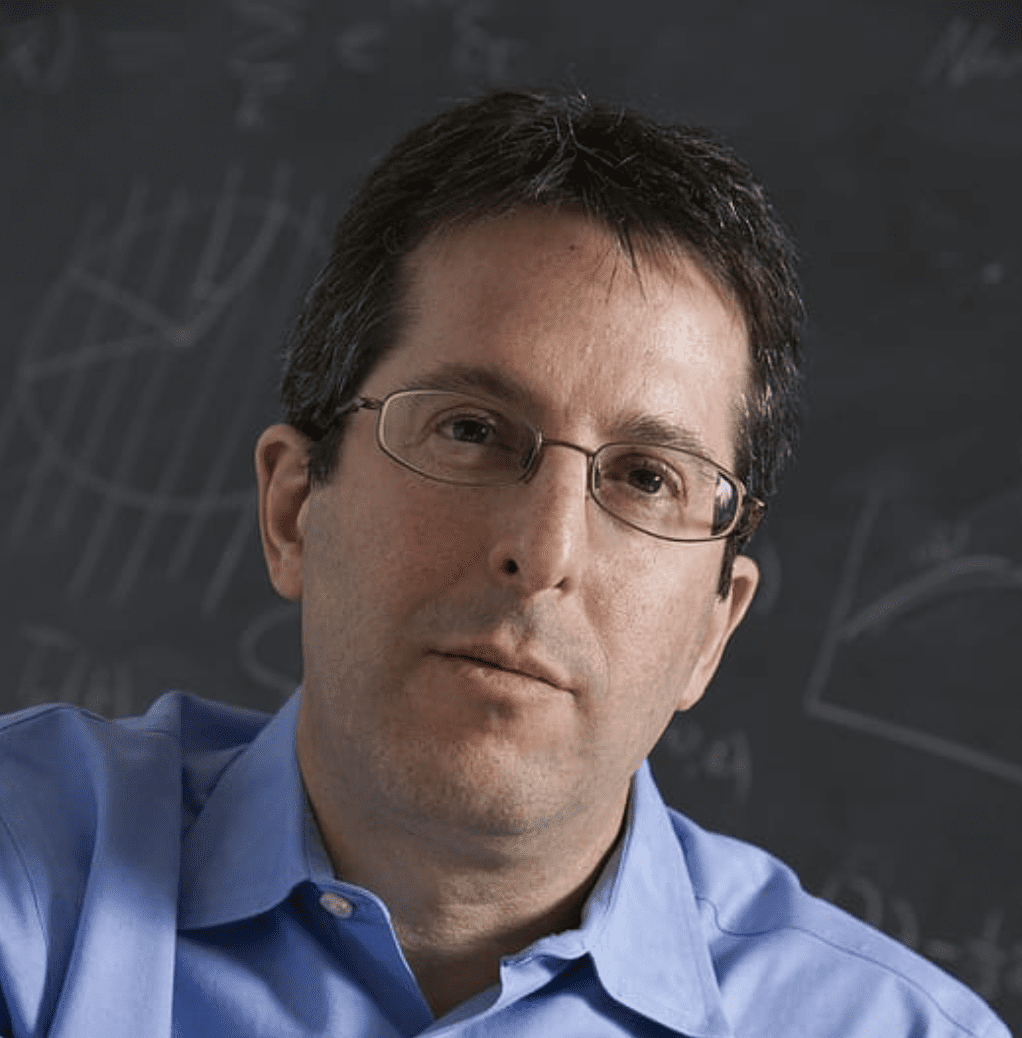
Scientist:
Four golden lessons
Steven Weinberg is in the Department of Physics, the
When I received my undergraduate
degree — about a hundred years ago — the physics literature seemed to me a
vast, unexplored ocean, every part of which I had to chart before beginning any
research of my own. How could I do anything without knowing everything that had
already been done? Fortunately, in my first year of graduate school, I had the
good luck to fall into the hands of senior physicists who insisted, over my
anxious objections, that I must start doing research, and pick up what I needed
to know as I went along. It was sink or swim. To my surprise, I found that this
works. I managed to get a quick PhD — though when I got it I knew almost
nothing about physics. But I did learn one big thing: that no one knows
everything, and you don't have to.
Another lesson to be learned, to
continue using my oceanographic metaphor, is that while you are swimming and
not sinking you should aim for rough water. When I was teaching at the
Massachusetts Institute of Technology in the late 1960s, a student told me that
he wanted to go into general relativity rather than the area I was working on,
elementary particle physics, because the principles of the former were well
known, while the latter seemed like a mess to him. It struck me that he had
just given a perfectly good reason for doing the opposite. Particle physics was
an area where creative work could still be done. It really was a mess in the
1960s, but since that time the work of many theoretical and experimental
physicists has been able to sort it out, and put everything (well, almost
everything) together in a beautiful theory known as the standard model. My
advice is to go for the messes — that's where the action is.
My third piece of advice is
probably the hardest to take. It is to forgive yourself for wasting time.
Students are only asked to solve problems that their professors (unless
unusually cruel) know to be solvable. In addition, it doesn't matter if the
problems are scientifically important — they have to be solved to pass the
course. But in the real world, it's very hard to know which problems are
important, and you never know whether at a given moment in history a problem is
solvable. At the beginning of the twentieth century, several leading
physicists, including Lorentz and Abraham, were
trying to work out a theory of the electron. This was partly in order to
understand why all attempts to detect effects of Earth's motion through the
ether had failed. We now know that they were working on the wrong problem. At
that time, no one could have developed a successful theory of the electron,
because quantum mechanics had not yet been discovered. It took the genius of
Albert Einstein in 1905 to realize that the right problem on which to work was
the effect of motion on measurements of space and time. This led him to the
special theory of relativity. As you will never be sure which are the right problems to work on, most of the time that you
spend in the laboratory or at your desk will be wasted. If you want to be
creative, then you will have to get used to spending most of your time not
being creative, to being becalmed on the ocean of scientific knowledge.
Finally, learn something about the
history of science, or at a minimum the history of your own branch of science.
The least important reason for this is that the history may actually be of some
use to you in your own scientific work. For instance, now and then scientists
are hampered by believing one of the over-simplified models of science that
have been proposed by philosophers from Francis Bacon to Thomas Kuhn and Karl
Popper. The best antidote to the philosophy of science is a
knowledge of the history of science.
More importantly, the history of
science can make your work seem more worthwhile to you. As a scientist, you're
probably not going to get rich. Your friends and relatives probably won't
understand what you're doing. And if you work in a field like elementary
particle physics, you won't even have the satisfaction of doing something that
is immediately useful. But you can get great satisfaction by recognizing that
your work in science is a part of history.
Look back 100 years, to 1903. How
important is it now who was Prime Minister of Great Britain in 1903, or
President of the
|
|
|
Sir – Steven Weinberg's Concepts essay "Four golden lessons" (Nature 426, 389; 2003) is full of idealism, based on his experience, garnered "about a hundred years ago". Sadly, the research and economic worlds have changed dramatically during the past quarter-century. I suggest that Weinberg's rules should be revised for modern would-be postgrads. One: look at the career structure in scientific research — it is virtually non-existent. Research careers are usually tied to teaching, so if you want to forge a future in research then you will need to secure academic tenure. If you are still dependent for your salary on 'soft' money –– research grants –– by the age of 35, you will then be told by (much older) tenured colleagues that you are "too old" for research and that you should look for another career. So see your early steps into the research world as leading towards a completely different career. Banking, finance or teaching are common end-points. Academic administration may provide a means for revenge against those professors who misled you about your future. Two: take note of which areas of research in your chosen discipline have the oldest entrenched academics, and head for those. Many were filled in the 1970s by baby-boomers who are now approaching retirement, so you may be well-positioned for one of their jobs. Three: look at the best jobs outside academia. For example, a well-known
scientific journal advertised a research position last year in a British
astrophysics department. Conditions included a poor salary of less than
£20,000 (US$35,000) a year, and limited tenure for
12 months "with the possibility of renewal for a further 12
months". The position required a maths/
physics postgraduate with extensive experience in database management. On the
following page was an advertisement from a Four: look at the new fields emerging for employment in big, profitable industries. For example, the pharmaceutical industry employs many graduates, in lab research, database and analysis, clinical trials and marketing. Annual reports will reveal what fields companies are moving into, and what they are dropping. 'Pharmacogenomics' and 'proteomics' are examples of trendy new fields that are attracting large budgets, whereas animal testing is gradually being wound down in favour of in vitro cell modelling and large-scale, mathematically based analysis such as cladistics. Choose your research path according to hard-headed economics, and forget the good old days when students went into research because it was fun. You know that things are different now.
|