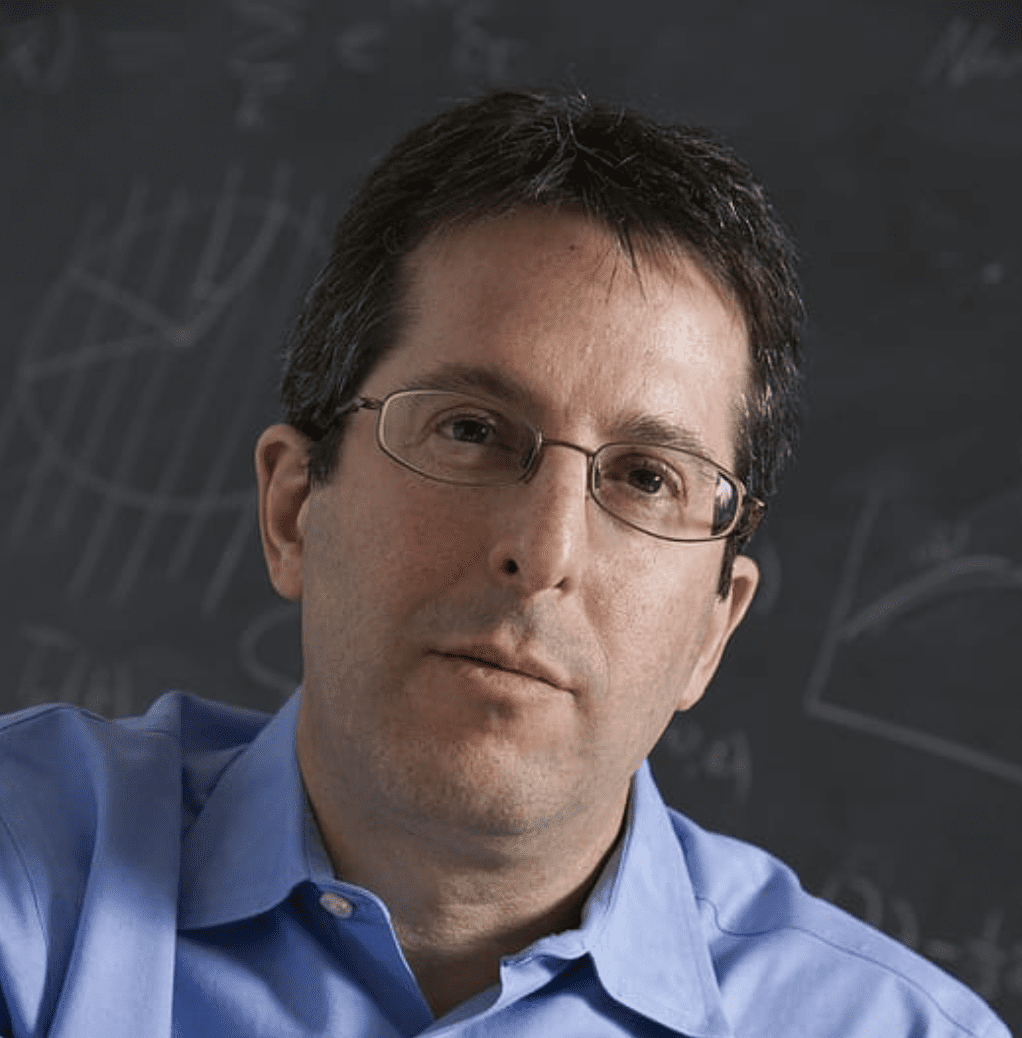

N. Peter ArmitageN. Peter Armitage
Department of Physics and
Astronomy
The Johns Hopkins University
Bloomberg 309
3400 N. Charles St.
Baltimore, MD 21218
USA
Tel
: +1 (410) 516-0214
Cell : +1 (410) 530-7882
Fax : +1 (410) 516-7239
npa <at> pha.jhu.edu
http://www.pha.jhu.edu/~npa
At the head of the Mer de Glace, Chamonix France - July 2005
Welcome to my webpage in The Department of Physics and Astronomy at The Johns Hopkins University. I am a condensed matter physicist who in recent years has been concerned with using various 'optical' techniques to investigate a wide variety of complex condensed matter systems. These have included materials as diverse as electron glasses, transition-metal oxides, DNA thin films, 2D superconductors, carbon nanotubes, and high-temperature superconductors.
The current main interest of my group at Hopkins is exotic electronic states of matter at low temperatures, including various superconductors, novel magnetic states, electronic glasses, and materials in proximity to quantum critical points. Other areas of interest are nanostructures, biological physics, and various aspects of physical chemistry and quantum optics.
Currently, we are developing a number of low-energy optical spectroscopies in the so-called 'Terahertz gap' - the experimentally difficult frequency region above that attainable with electronics, but below that accessible with optics (photonics). This frequency range (and attendant picosecond time scales) is host to many phenomena in condensed matter systems and is a true frontier in 'optical' and condensed matter research. Among other experimental apparatuses, we are implementing a novel time-domain THz spectrometer, which is one of the emerging tools for condensed matter physicists in obtaining spectroscopic information in this technically challenging frequency range. A new microwave broadband spectrometer is also being developed.
The investigation of the above materials systems with THz and broadband microwave radiation are wide open areas with great scientific and personal opportunity. I encourage interested students to come talk to me.
Ph.D. Stanford University, Department of
Physics: January 2002
Thesis Title: "DOPING THE
COPPER-OXYGEN PLANES WITH ELECTRONS: THE VIEW WITH
PHOTOEMISSION"
Advisor: Z.-X. Shen
B.S. from Rutgers University, Department of Physics: May 1994
Complete CV .pdf file format
Towards the Lifshitz point in elemental bismuth: A pressure dependent optical investigation
Riccardo Tediosi, N.P.Armitage, E. Giannini, L. Forro, D. van der Marel
to be submitted Phys. Rev. Lett.Progress and perspectives on the electron doped cuprates
N.P.Armitage, P.Fournier, R.L. Greene
to be submitted Reviews of Modern PhysicsCharge carrier interaction with a purely electronic collective mode: Plasmarons and the infrared response of elemental bismuth
Riccardo Tediosi, N.P.Armitage, E. Giannini, D. van der Marel
Phys. Rev. Lett. 99, 016406 (2007).Characterization of the electron-phonon coupling in SrTi1-xNbxO3 by optical and terahertz spectroscopy
J.L.M. van Mechelen, C. Grimaldi, N.P. Armitage, A.B. Kuzmenko, D. van der Marel
submitted Phys. Rev. Lett. 2007.Fluctuations, dissipation, and nonuniversal superfluid jumps in two-dimensional superconductors
R.W. Crane, N.P. Armitage, A. Johansson, G. Sambandamurthy, D. Shahar, G. Gruner
Phys. Rev. B. 75, 094506 (2007)
Survival of Superconducting Correlations Across the
2D Superconductor-Insulator Transition: A finite frequency study
R.W. Crane, N.P. Armitage, A.
Johansson, G. Sambandamurthy, D. Shahar, G. Gruner
Phys. Rev. B 75, 184530 (2007)
Charge
Transfer and Charge Transport on the Double Helix
N.P. Armitage, M.
Briman, G. Gruner
Phys. Stat. Sol. 241, 69-75 (2004)
Quasi-Langmuir-Blodgett
thin film deposition of carbon nanotubes
N. P. Armitage, J.-C. P. Gabriel, and G.
Grüner
J. of App. Phys. 95, 3228
(2004).
Dipole
Relaxation Losses in DNA
M. Briman, N.P. Armitage, E.
Helgren, G. Gruner
Electrodynamics
of a Coulomb Glass in n-Type Silicon
E. Helgren, N.P.
Armitage, G. Gruner
Phys. Rev. Lett.
89, 246601 (2002)
Doping
Dependence of Nd2-xCexCuO4
investigated by angle-resolved photoemission
N.P. Armitage,
F. Ronning, D.H. Lu, C. Kim, A. Damascelli, K.M. Shen, Z.X. Shen,
P. Mang, N. Kaneko, M. Greven, Y. Onose, Y. Taguchi, Y.
Tokura
Phys. Rev. Lett.
88, 257001 (2002)
Anisotropy
of the Superconducting Gap in
Nd1.85Ce0.15CuO4: Results from
Photoemission
N.P. Armitage,
D.H. Lu, D.L. Feng, C. Kim, A. Damascelli, K.M. Shen, F. Ronning,
Y. Onose, Y. Taguchi, Y. Tokura, Z.X. Shen
Phys. Rev. Lett.
86, 1126 (2001)
The Advanced and Intermediate Lab - Fall 2006
Frontier Physics - Spring 2007
Introduction to Condensed Matter Physics - Fall 2007
The Advanced and Intermediate Lab - Spring 2008

"...Sisyphus teaches the higher fidelity that negates the gods and raises rocks. He too concludes that all is well. This universe henceforth without a master seems to him neither sterile nor futile. Each atom of that stone, each mineral flake of that night-filled mountain, in itself forms a world. The struggle itself towards the heights is enough to fill a man's heart. One must imagine Sisyphus happy." - Albert Camus, Le Mythe de Sisyphe, 1942
last modified January. 27, 2008