cover main cv research projects teaching E & N

Where you are now:
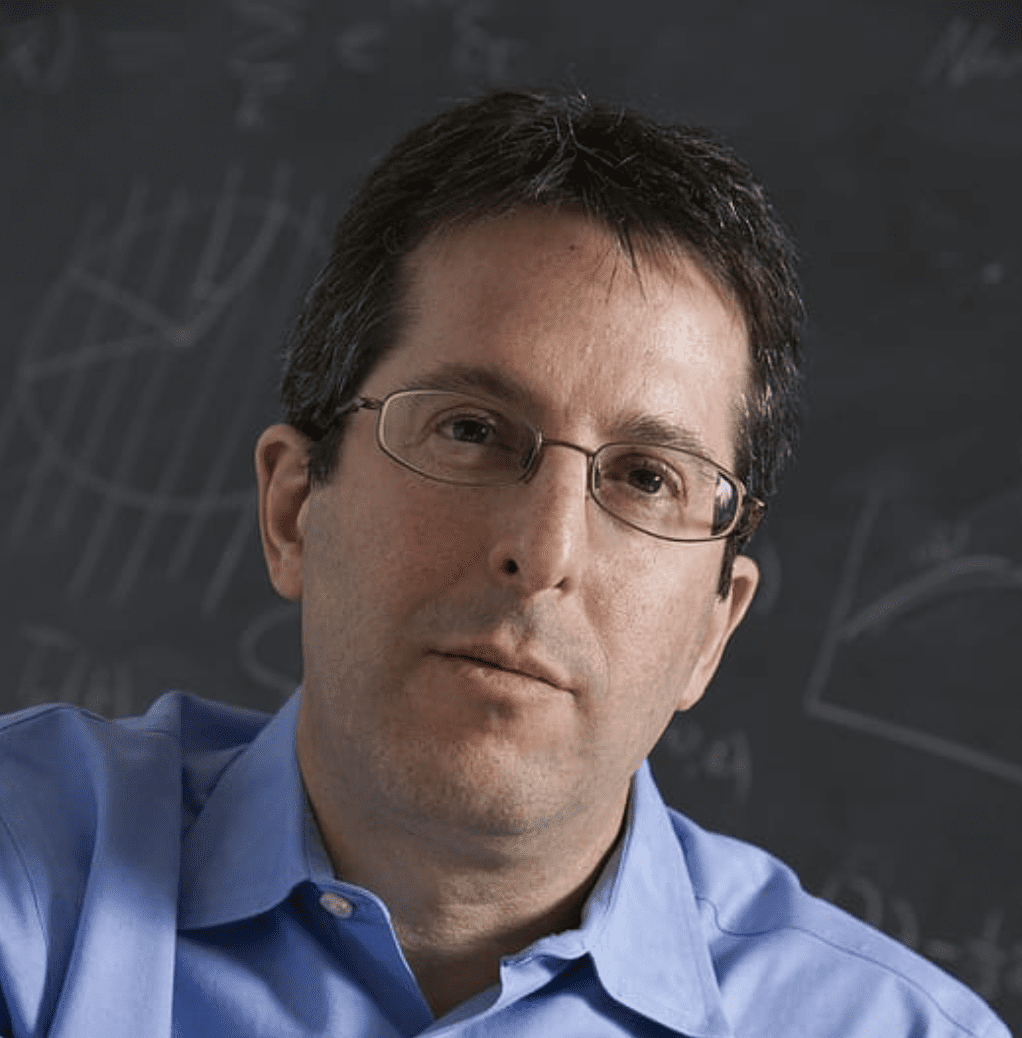
You happened to have come across the homepage of Nadia L. Zakamska.

Where I am now:
I am an assistant professor of astrophysics at the Department of Physics and Astronomy at Johns Hopkins University. Until recently, I was a research associate at Kavli Institute for Particle Astrophysics and Cosmology at SLAC/Stanford University. Before that, I was a five-year member at the Institute for Advanced Study.

Research group at JHU:
Dr. Guilin Liu (Ph.D. 2011 from UMass), postdoctoral researcher
Mr. Mohammad Safarzadeh, graduate student
Mr. Nick Lybarger, undergraduate student
Mr. Matthew Hill, undergraduate student [Recepient of the 2012 Dean's Undergraduate Research Award]
Some of our ongoing research projects are listed here, and more are available for interested graduate and undergraduate students (feel free to contact me; email is best).

Research interests:

  • Most of my current interests are in observational extragalactic astronomy, on topics that can be broadly summarized as evolution of massive galaxies and their supermassive black holes.
  • Specifically, I study Active Galactic Nuclei at all wavelengths and all redshifts (here you can find a popular article about black holes, Active Galactic Nuclei and their luminous subclass - quasars);
  • I am involved in a range of projects to study extreme starburst galaxies and physics of interstellar medium in them (these galaxies form stars at a rate hundreds of times higher than the Milky Way, and they are uncommon now, but were much more abundant in the past);
  • I am interested in multi-wavelength surveys and data mining (e.g., Sloan Digital Sky Survey) and in teasing out very rare objects from large datasets.
  • In addition, I maintain active interest in theoretical astrophysics, including (but not limited to):
  • Outflows from compact objects -- black holes and neutron stars;
  • Dynamics of planetary and stellar systems (here you can find a popular article about extrasolar planets).
    Some past research topics are described here in more detail.
  • Women In Physics meetings:
    Schedule is here.